
A new era in metabolic monitoring
From patterns to physiology.
Optec4Life is developing a non-invasive Raman-based platform to access physiological and metabolic information from tissue, starting where it matters most: fetal monitoring during labour.
Technology
Light in. Physiology out.
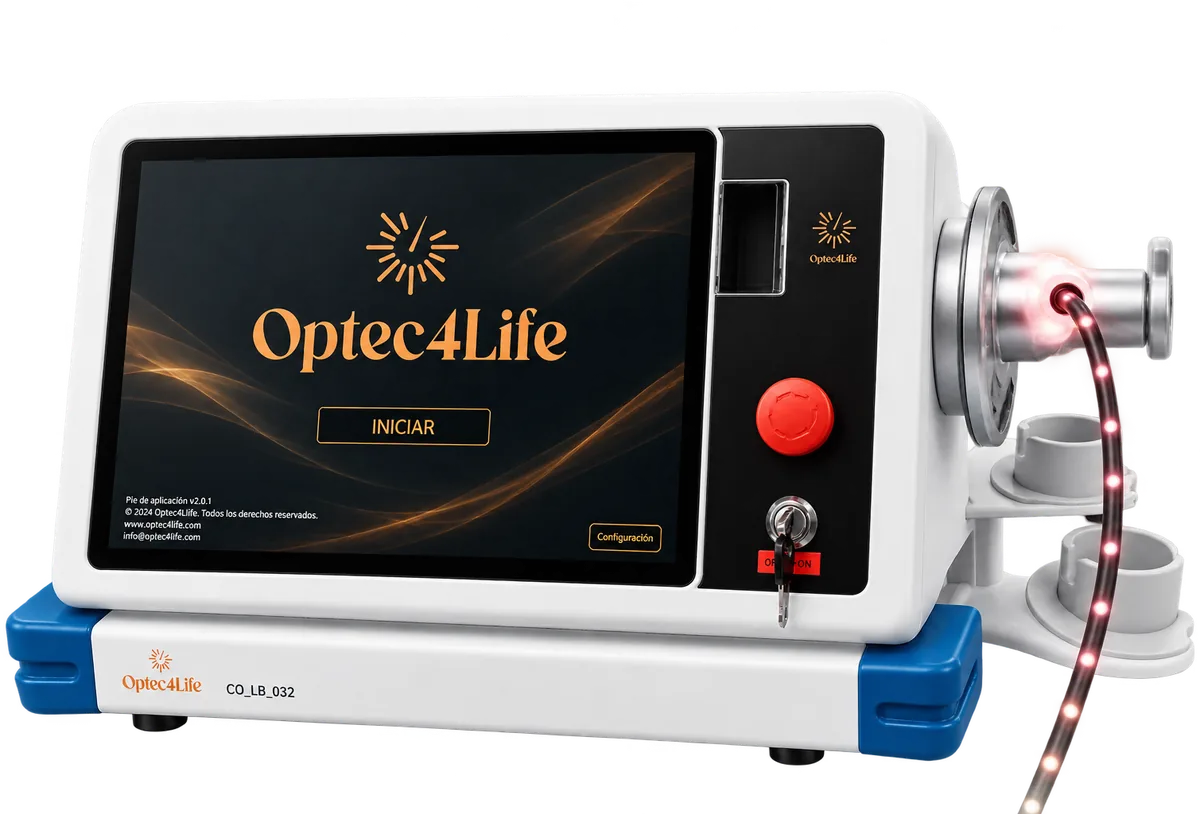
Optec4Life combines Raman spectroscopy, dedicated optical probes and machine learning to extract physiological information from optical signals coming from biological tissue.
Raman spectroscopy is a technique that captures molecular and biochemical information from biological tissue without labels.
Advanced computational models transform spectral data into clinically meaningful information in real time.
- Contact: a gentle optical probe meets the tissue.
- Light in: laser light interacts with the tissue’s molecules. Most light scatters unchanged; a tiny fraction changes colour. That is the Raman signal, a chemical fingerprint of the tissue’s physiology.
- Signal: the molecular fingerprint travels through optical fibre.
- Physiology out: the spectrum appears on screen in real time, ready to be translated into physiological insight.
From light to insight
Tap or hover each step
-
Light–tissue interaction
Laser light interacts with fetal tissue, generating a unique molecular response.
-
Raman spectral signal
Inelastic scattering produces a spectral fingerprint of the tissue.
-
Signal processing
Advanced algorithms filter and interpret the Raman signal, removing noise.
-
Machine learning model
AI models analyse the spectral data to extract physiological and metabolic information.
-
Physiological information
Relevant biomarkers and physiological indicators are estimated in real time.
-
Clinical decision support
Actionable insights to support safer and more informed clinical decisions.
Projects
One technology. Different frontiers.
We are exploring the potential of Raman-based physiological monitoring across different clinical and performance environments.
-
 Lead application
Fetal
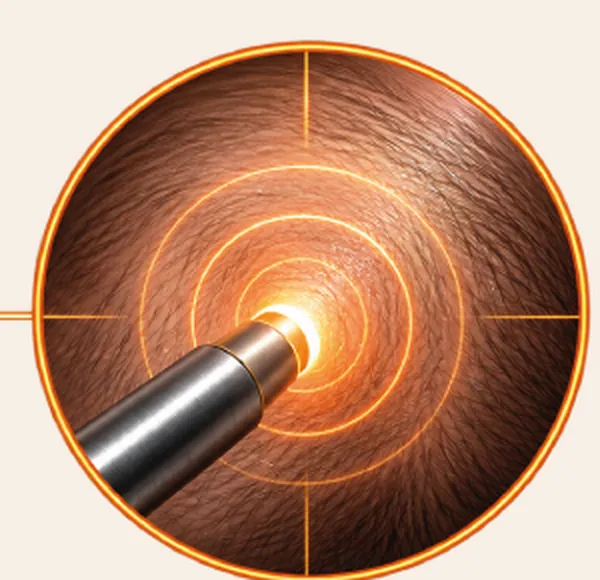
Continuous Raman monitoring during labour to detect fetal hypoxia and acidosis early.
-
 Exploring
Sport
Real-time monitoring of physiological and metabolic changes during exercise.
-
 Exploring
ICU
Continuous physiological and metabolic monitoring of critically ill patients at the bedside.


Our goal: fetal monitoring
Not another interpretation layer. A new information layer.
During labour, clinicians need to detect fetal compromise early while avoiding unnecessary interventions. Electronic fetal monitoring is continuous, but it mainly reflects fetal heart-rate patterns: signals that matter, but are indirect. Is the fetus compensating, or is metabolic compromise progressing?
Many innovations focus on improving the interpretation of existing signals. Optec4Life takes a different approach: a new optical monitoring layer designed to provide physiological and metabolic insight from tissue signals. Not to replace clinicians or current monitoring, but to give them better information when decisions matter most.
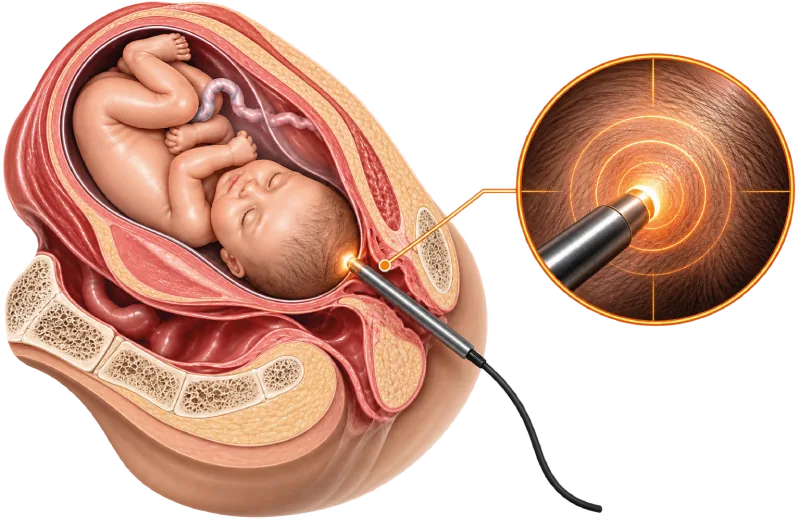
Designed to measure where it matters
The optical probe is placed on the fetal scalp during labour to acquire Raman signals from fetal tissue, enabling real-time analysis of physiological and metabolic information.
- Safe and simple to use
- Designed for the labour room
- Real-time insights
Current fetal monitoring compared with the Optec4Life approach
- Heart-rate patternsPhysiological and metabolic insight
- Indirect proxiesOptical biochemical signals
- Pattern interpretationObjective decision-support layer
- Intermittent invasive sampling, when availableNon-invasive continuous monitoring (under development)
- Uncertainty around true fetal compromiseAdditional information on fetal physiological status
What remains difficult to access todayO₂ statusMetabolic stressAcid–base balancePhysiological trajectory
Current fetal monitoring sees patterns.
Optec4Life aims to reveal physiology.
The challenge is not simply to detect changes in fetal heart-rate patterns, but to understand what they mean physiologically. Continuous metabolic information could give clinicians deeper insight into how the fetus is responding during labour.
The company
A deeptech medtech spin-off from CIC nanoGUNE
Optec4Life was created to translate advanced photonics into clinical tools for real-time decision-making in maternal and fetal medicine.
- 11People, one shared purpose
- 3Application areas
- 7Ecosystem partners
- DonostiaSan Sebastián, Basque Country

Team
A multidisciplinary team with a shared purpose
Leadership team
-

Francesc Paris Huguet
Chief Executive Officer
Leading Optec4Life’s strategy, fundraising, partnerships and clinical translation.
-

Jaione Etxebarria
Chief Technology Officer
Leading the development of Optec4Life’s Raman-based monitoring platform.
-

Andreas Seifert
Chief Scientific Officer
Expert in optical technologies and nanoengineering applied to biomedical innovation.
-

Ibon Jaunarena
Chief Medical Officer
Bringing clinical insight from maternal and fetal medicine into technology development.


Research & development
-

Carmen Martin
Postdoctoral researcher
-

Itziar Campo
Predoctoral researcher
-

Carlos Martinez
MSc thesis / Predoctoral researcher
-

Saioa González de San Pedro
MSc thesis / Predoctoral researcher
-

Bernat Valsells
Software Engineer
-

Cindy Mejia
Lab Technician
-

Ion
Optec4Life team


A strong ecosystem
Built with a strong clinical and scientific ecosystem
Optec4Life works within an ecosystem of scientific, clinical and institutional partners supporting the development and validation of its technology.








Contact
From indirect fetal signals to real-time metabolic insight.
We are open to conversations with clinical partners, research collaborators, investors and medtech industry stakeholders. If you are interested in learning more about Optec4Life, please get in touch.
Contact us- Emailinfo@optec4life.com
- LinkedInFollow Optec4Life (opens in a new tab)
-
LocationAvenida de Tolosa, 76
20018 Donostia-San Sebastián, Spain